HONDA 2196893 Rear Axle
fits model: Xr100r, Crf100, Xr80, Crf80. make: Honda.
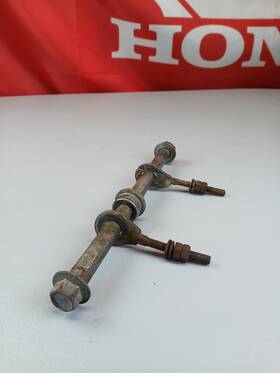
( Manufacturer Part Number: 2196893 ), ( Part Type: Axle ), ( Placement On Vehicle: Rear ), ( Country Of Origin: Japan )
Review HONDA Rear Axle fits XR100R CRF100 XR80 CRF80
The **Honda 2196893 Rear Axle** is a precision-engineered component designed exclusively for Honda s iconic **XR100R, CRF100, XR80, and CRF80** off-road motorcycles, ensuring optimal performance, durability, and reliability for riders navigating rugged terrain. Crafted from high-grade steel, this axle is built to withstand the demands of trail riding, offering a robust yet lightweight solution that enhances the bike s handling and stability. The axle features a **smooth, polished finish** with meticulously machined threads, ensuring a secure and leak-free fit when paired with the corresponding rear suspension components. Its **universal compatibility** across multiple Honda models makes it an essential replacement part for riders upgrading their bikes or addressing wear and tear from frequent off-road use. Whether restoring stock performance or customizing the bike for aggressive trail riding, this axle delivers the strength and precision required to maintain a tight, responsive connection between the rear wheel and swingarm. Honda s reputation for engineering excellence is reflected in every detail, from the **precise tolerances** that prevent excessive play to the **corrosion-resistant coating** that extends longevity in harsh environments. For enthusiasts seeking a direct, no-compromise fit, this axle is the ideal choice combining Honda s legendary reliability with the adaptability needed for both daily commuting and exhilarating off-road adventures.
### **Pros and Cons of Buying a Used Honda XR100R, CRF100, XR80, or CRF80 (Rear Axle: 2196893)**
These models Honda s 80cc and 100cc dual-sport bikes are popular among riders seeking lightweight, fuel-efficient, and versatile off-road and commuting options. The rear axle **2196893** is common across these models, but each has distinct strengths and weaknesses depending on intended use.
---
### **Pros**
1. **Lightweight and Maneuverable**
- The XR100R, CRF100, XR80, and CRF80 are among the lightest production motorcycles, making them easy to handle in tight spaces, on trails, or in urban environments.
- Ideal for riders of all ages and sizes, including younger or smaller operators.
2. **Fuel Efficiency**
- These bikes consume very little fuel typically **50 70 mpg** making them cost-effective for short trips or daily commuting.
- A full tank (around **1.5 2 gallons**) can last for **100 miles** on a single fill-up.
3. **Low Maintenance Costs**
- Simple 80cc/100cc engines require minimal upkeep compared to larger bikes.
- Fewer moving parts mean lower long-term expenses for repairs and replacements.
- Easy-to-service components (e.g., carburetors, chains, brakes) are affordable and widely available.
4. **Versatility**
- Designed for both on-road and off-road use, though the **XR100R and XR80** are more trail-oriented, while the **CRF100 and CRF80** are slightly more street-friendly.
- Can be used for commuting, light trail riding, or even as a training bike for beginners.
5. **Durability (When Properly Maintained)**
- Honda s reputation for reliability extends to these models, especially if the bike has been well-cared-for.
- The **2196893 rear axle** is a standard component with few reported failures if the suspension and drivetrain are in good condition.
6. **Easy to Modify**
- Aftermarket parts (exhausts, handlebars, seats) are widely available, allowing customization for performance or comfort.
- Can be stripped down for minimalist trail use or equipped for urban commuting.
7. **Low Insurance Costs**
- Due to their small size and low power (typically **8 10 HP**), insurance premiums are significantly cheaper than for larger bikes.
8. **Resale Value**
- Honda s brand loyalty ensures these bikes hold value better than many competitors, especially if they are in good condition.
9. **Beginner-Friendly**
- The low power and weight make them suitable for new riders learning balance and control.
- Easier to handle in stop-and-go traffic or on rough terrain than larger bikes.
10. **Compact Storage**
- Small size allows for easy storage in garages, apartments, or even under desks.
---
### **Cons**
1. **Limited Power and Speed**
- The **80cc/100cc engines** produce **very little power** (around **8 10 HP**), making them slow on highways or steep climbs.
- Top speeds are typically **40 50 mph**, which can be frustrating for riders expecting more performance.
- Not suitable for long-distance touring or high-speed riding.
2. **Poor High-Speed Stability**
- The lightweight frame and small wheels make these bikes **wobbly at higher speeds** (above 40 mph).
- Require constant attention to steering, especially in windy conditions.
3. **Comfort Limitations**
- **Hard seats** and minimal suspension travel (especially on older models) lead to fatigue on longer rides.
- No wind protection, making them uncomfortable in windy or cold conditions.
- Smaller tires (typically **17 18 inches**) can be less forgiving on rough terrain compared to larger dual-sports.
4. **Reliance on Manual Transmission**
- All models use a **5-speed manual transmission**, which can be cumbersome for stop-and-go traffic.
- No clutch assist on some models (e.g., older XR80/XR100R), making starting uphill difficult.
5. **Weather Sensitivity**
- **No windshield or fairings** mean riders are exposed to rain, wind, and debris.
- Cold weather can make starting the engine difficult, especially in older models without electric starters.
6. **Limited Aftermarket Support (Compared to Larger Bikes)**
- While parts are available, the aftermarket for these bikes is **not as extensive** as for larger Honda models (e.g., CBR, CRF250).
- Customization options (e.g., high-performance exhausts, suspension upgrades) are limited.
7. **Legal Restrictions in Some Areas**
- Some regions **ban or restrict** 80cc/100cc bikes on highways or require additional licensing (e.g., moped permits).
- Check local laws before purchasing, as these bikes may not be street-legal in all locations.
8. **Depreciation**
- While they hold value better than many bikes, they still depreciate quickly. A used example may not retain much resale value after a few years.
9. **Maintenance Can Be Inconvenient**
- Some components (e.g., carburetors, chains) require frequent adjustments, which may not be as straightforward as on modern fuel-injected bikes.
- Older models may lack modern diagnostics, making troubleshooting harder.
10. **Not Suitable for Heavy Riders**
- The **maximum recommended rider weight** is typically **under 200 lbs (90 kg)**. Heavier riders may struggle with handling and stability.
---
### **Key Differences Between Models**
**Model** **Best For** **Key Notes**
------------------ --------------------------------------- --------------------------------------------------------------------------------
**Honda XR100R** Off-road/trail riding Aggressive suspension, minimalist design, no windscreen.
**Honda CRF100** Urban commuting with some trail use Slightly more street-friendly than XR100R, better ergonomics.
**Honda XR80** Budget-friendly off-road Older design, simpler mechanics, but less refined than XR100R.
**Honda CRF80** Beginner-friendly commuting Most street-oriented of the group, electric starter (on newer models).
---
### **Conclusion and Recommendation**
#### **Who Should Buy One?**
- **Riders who prioritize fuel efficiency, lightweight handling, and low cost** over power.
- **Beginners** looking for an easy-to-ride bike for learning or short trips.
- **Urban commuters** who need a practical, no-frills bike for city riding.
- **Off-road enthusiasts** on a budget who don t need high-speed capability.
- **Those who enjoy customization** and don t mind minimal comfort.
#### **Who Should Avoid Them?**
- **Riders expecting highway speeds or long-distance comfort.**
- **Those who need heavy-duty suspension or wind protection.**
- **Heavier riders (over 200 lbs) who may struggle with handling.**
- **People who want modern features** (e.g., fuel injection, ABS, digital dashboards).
#### **Final Recommendation**
- **Best Overall Pick:** **Honda CRF100** A balanced choice for commuting and light trail use, with slightly better ergonomics than the XR100R.
- **Best Budget Off-Road:** **Honda XR80** Cheaper than the XR100R but less refined; ideal for riders who want a no-frills trail bike.
- **Best for Beginners:** **Honda CRF80** Electric starter (on newer models) and street-friendly design make it the easiest to learn on.
- **Best for Enthusiasts:** **Honda XR100R** If you love off-road riding and don t mind sacrificing comfort for agility.
**Before Buying:**1. **Inspect the rear axle (2196893) and suspension** for wear or damage.
2. **Check the chain and sprocket** for stretch or rust.
3. **Test the brakes** disc brakes (if equipped) should be responsive; drum brakes may need replacement.
4. **Verify the engine s condition** listen for unusual noises and check for oil leaks.
5. **Ensure the bike is legally street-legal** in your area (some regions restrict 80cc/100cc bikes).
6. **Consider a pre-purchase inspection** if possible, especially for older models.
These bikes are **excellent for their intended purposes** short trips, commuting, or light off-roading but they are **not suitable replacements for larger, more capable motorcycles** if you need speed, comfort, or durability for heavy use. If you re looking for a **simple, affordable, and efficient** bike, any of these models will serve you well with
Details:
Straight axle with good threads. In Good Usable Working Condition off a 2000 Honda XR100R.
part #: 2196893 prices
- $29.95-$34.95
specifications fendeframat:
- for models: Xr100r, Crf100, Xr80, Crf80
- for makes: Honda
- mpn: 2196893
- part type: Axle
- placement on vehicle: Rear
- country of origin: Japan
payments fendeframat:
- wallet: Paypal
- other
- credit card: Mastercard
seller fendeframat:
- city: Los Fresnos, Texas
- rating: 99.8%
- # reviews: 1445
shipping fendeframat:
- type: Fixed
- service: USPS Ground Advantage
- carrier: USPS
- cost: $0.00
- transit: 4-8 Days
- class: Standard
offer fendeframat:
- quantity: 1
- availability: In Stock
- sold: 0
- started: April 26, 2026
- options: Ship-to-home
general fendeframat:
- Motorcycle Scooter Parts Accessories > Body Frame > Other Body Frame
- condition: Used
returns fendeframat:
- paid by: Buyer
- policy: Returns Accepted
- time: 30 Days
Honda 2196893 Is Similar To:
- 1300s Rear 2006 Vtx Complete Honda Fender (29.2% similar) Fender set, RR. This offer is for a used genuine oem honda rear fender off of a 2007 VTX1300S that was converted into a trike. R303M Cabernet red part Mae A20ZC retail the rest of the fender is in great condition. There is a small chip on the tip of the fender and some marks under where the chrome...(August 28th, 2015)
- 80100-110-671df Honda Sl 100 Rear Fender New Candy Emerald Green (30.4% similar) Paint and fender are perfect. No chips, dings etc. Fits honda SL 100 disport model's. May fit other model's. Brand new, genuine honda SL100 rear fender. Color is candy emerald green...(November 2nd, 2015)
- 80110-mch-f10zb Fender Vtx1800f Honda Oem Brand Rear (26% similar) Brand new oem honda rear fender for a 2005 honda VTX1800F may fit other years brand new in the box save big...(August 22nd, 2015)
- 80110-mea-6707e 77350-mcv-00 Honda 2003-2005 Rear Fender Vtx 1300 S And R (29.8% similar) Honda part Mae 670ZE drongo red met. Helmet lock has no key. Comes with inner grab rail and rear fender pipe. Also fits 06 TX 1300 rear fender TX 1300 model's...(October 26th, 2015)
- 80110-mm8-880zb Vt1100c Rear Shadow Honda Fender (25% similar) This is new in the box. This offer is for a genuine honda rear fender for the following list of bikes. 1992 VT1100C ac rear fender 1993 VT1100C ac rear fender...(August 25th, 2015)
- Vtx1800n Honda 2007 07 Vtx1800 Oen Rear Fender Mud Guard Wheel Hugger (35.9% similar) Note used parts are sold as is, and are described to the best of our ability. This item is in great used working condition. If you are unsure of an item, ask questions before buying. Most items sold are used, unless stated, and will have wear...(October 31st, 2015)
- 300fw 1988 Maier Blue Rear Fender Trx Honda 4x4 Dark (24% similar) I will reply within 24 hours. Remember that I am always at your service. Buyer pays return shipping. Mailer manufacturing is the largest manufacturer of vacuum formed plastic products in the nation. Keep all packaging materials and the original shipping box. Do not hesitate to contact me. I will try...(September 6th, 2015)
- Fender Vt1100 Aero 1997 Shadow 1995 1996 Rear Honda Oem Painted (30.6% similar) Has some factory imperfections and other minor light scratches from sitting around. Parts that have any electrical pieces or components are not returnable. I do not know the exact fitment...(August 1st, 2015)
- Black Oem Fender Honda Aero 98-00 Vt1100c3 Painted Rear Shadow (34.5% similar) If you are outside the 48 contiguous states or need faster delivery service, please before purchasing the item. Parts that have any electrical pieces or components are not returnable...(July 29th, 2015)
- Irc T10519 2 60 100x10 2.50x10 Front And Rear Tire Yamaha Pw50 Honda Xr50 crf50 (31.5% similar) Please review the entire to verify proper fitment. Mini motocross tires. A division of. Some items may have a slightly different appearance than what is shown in the picture. Offers improved durability, stability and performance. Looking for other products...(November 5th, 2023)
- Bvp 99-070 Honda Cb350 Cb450 Cb550 Cb750 Rear Tire Tube (35% similar) CB750 1969 - 2003 . Z1 900 all years. KZ900 all years. CB450 all years...(November 17th, 2023)