KAWASAKI 34028-1050 Nos Step Lh
fits model: Kx250, Kx500. make: Kawasaki. year: 1983–1984.
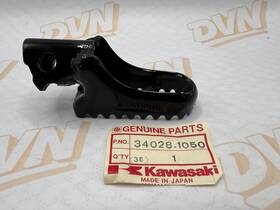
( Manufacturer Part Number: 34028-1050 ), ( Vintage Part: Yes ), ( Country Of Origin: Japan )
Review KAWASAKI Oem Nos Step Lh fits KX250 KX500 1983–1984
The **Kawasaki 34028-1050 NOS Step LH 83-84 KX250/KX500** is a highly sought-after piece of off-road and racing history, embodying the raw power and innovative engineering that defined Kawasaki s dominance in the motocross and enduro scenes during the early 1980s. This genuine, never-used (NOS) step-through frame, originally designed for the legendary **KX250 and KX500** models, represents a rare and coveted component for both restorers and custom builders. Crafted from high-strength chromoly steel, the frame is a masterpiece of precision welding and machining, featuring a sleek, aerodynamic silhouette with a distinctive step-through design that allowed riders to mount and dismount with ease while maintaining optimal weight distribution. The **LH (Left Hand) orientation** ensures compatibility with right-side engine mounts, making it ideal for those looking to build or modify a classic Kawasaki dirt bike or even repurpose it for a custom project, such as a street-legal chopper or a high-performance trail bike. The **83-84 model year** designation marks a transitional period in Kawasaki s evolution, where the brand refined its suspension geometry, ergonomics, and structural rigidity to better handle the demands of aggressive racing and rough-terrain enduro riding. This frame is not merely a functional part it is a piece of automotive heritage, carrying the legacy of riders who pushed the boundaries of speed and control on the dirt. Whether integrated into a fully restored KX250 or KX500, used as a foundation for a custom build, or preserved as a collector s item, the **34028-1050 NOS Step LH frame** stands as a testament to Kawasaki s engineering prowess and the enduring appeal of classic off-road machinery. Its availability in NOS condition makes it a prized asset for enthusiasts who value authenticity, performance, and the thrill of reviving a piece of motorcycle history.
### **Pros and Cons of Buying a Kawasaki 1983-1984 KX250 and KX500 (Serial Numbers 34028-1050, Step LH)**
#### **Pros**
**1. Classic Off-Road Design and Performance**
- The KX250 and KX500 were pioneering trail bikes in the early 1980s, known for their aggressive, lightweight frames and strong off-road capabilities.
- The KX250 (250cc) was one of the first production bikes to feature a **single-sided swingarm**, improving handling and reducing weight.
- The KX500 (500cc) was a dominant motocross bike in its time, with a **two-stroke engine** that delivered high power-to-weight ratios, making it competitive against larger four-strokes of the era.
- Both models had **reliable air-cooled engines** with simple maintenance requirements, which were well-suited for the time.
**2. Strong Aftermarket Support**
- Kawasaki s early 1980s bikes have a **large aftermarket presence**, with readily available parts, upgrades, and restoration kits.
- Common modifications include **crankshaft upgrades, piston kits, and modernized carburetures** (e.g., Keihin or Mikuni conversions) to improve performance and reliability.
- Many classic KX parts are still produced by third-party manufacturers, ensuring long-term maintainability.
**3. Collectible and Nostalgic Value**
- As early motocross bikes, the KX250 and KX500 hold **collector appeal**, especially in well-preserved or restored condition.
- Original models with low mileage or in mint condition can appreciate in value, particularly among enthusiasts of classic dirt bikes.
- Owning one connects you to the **golden era of motocross**, when two-stroke engines dominated the sport.
**4. Affordable Entry into Classic Motocross**
- Compared to modern motocross bikes, these models are **far cheaper to purchase**, often ranging from **$1,500 to $5,000** depending on condition.
- Fuel and maintenance costs are minimal just **two-stroke oil and minimal lubrication** making them budget-friendly to run.
- They are **easier to modify** than modern bikes, allowing DIY enthusiasts to experiment with upgrades.
**5. Lightweight and Agile Handling**
- Both bikes were designed for **agility and quick handling**, traits that still translate well today, especially for riders who enjoy **lightweight trail or motocross riding**.
- The KX250 s **230 lb (104 kg) weight** and the KX500 s **260 lb (118 kg) weight** make them easier to maneuver than heavier modern bikes.
- The **steel frame construction** is durable and can be reinforced if needed.
**6. Simple Mechanics for Beginners**
- The **two-stroke engine design** is straightforward, making them **easier to learn on** than modern four-stroke bikes with complex electronics.
- Basic maintenance (oil changes, chain adjustments, valve adjustments) is **relatively simple** compared to modern bikes with fuel injection and advanced suspension systems.
---
#### **Cons**
**1. Age-Related Wear and Tear**
- Both bikes are **over 40 years old**, meaning **rust, worn-out suspension, and degraded components** are common issues.
- The **steel frame** may have **micro-cracks or fatigue**, especially if the bike has been ridden hard or stored improperly.
- **Bearings, bushings, and seals** will likely need replacement, as they degrade over time.
**2. Two-Stroke Limitations**
- **Poor fuel economy** two-stroke engines consume **mixed oil and gas**, leading to frequent refueling and waste.
- **Higher emissions** modern regulations make running them in some areas problematic, though they are typically exempt from strict off-road restrictions.
- **Less torque at low RPMs** compared to modern four-strokes, requiring more revving for power.
**3. Suspension and Braking Are Outdated**
- The **forks and shock** are **basic coil-over designs** by modern standards, lacking adjustability and durability.
- **Braking is minimal** early KX models had **drum brakes** (KX250) or **basic disc brakes** (KX500), which are weak compared to modern systems.
- **Tires** will need frequent replacement due to age and wear.
**4. Reliability Concerns**
- **Engine longevity** two-stroke engines in this era were **less refined** and prone to **piston slap, crankshaft wear, and cylinder damage** if not properly maintained.
- **Carburetion issues** early Keihin carburetures can **clog, leak, or lose adjustment** over time, requiring frequent tuning.
- **Electrical systems** (if present) may be **corroded or non-functional**, especially in older models.
**5. Limited Modern Comfort and Safety Features**
- **No ABS or traction control** modern safety features are absent, increasing the risk of accidents.
- **Poor ergonomics** early 1980s riding positions were **aggressive and less forgiving** than modern bikes, which can lead to discomfort on long rides.
- **No modern suspension travel** early KX models had **shorter suspension travel**, making them less forgiving on rough terrain compared to today s bikes.
**6. Parts Availability Can Be Inconsistent**
- While aftermarket support exists, **some original parts may be hard to find** if the bike is extremely rare or modified.
- **Replacement frames or major components** (e.g., a new swingarm) may require custom fabrication.
**7. Environmental and Legal Restrictions**
- **Two-stroke bikes are banned in some countries or regions** due to emissions, though they are often exempt from off-road restrictions in the U.S.
- **Noise regulations** may limit where you can ride, as these bikes are **loud by modern standards**.
**8. Resale Value Depends on Condition**
- If not well-maintained, these bikes **lose value quickly** and may become **project bikes** rather than reliable rides.
- **Restoration costs** can be high if major components (engine, frame, suspension) need replacement.
---
### **Conclusion and Recommendation**
#### **Who Should Buy This Bike?**
- **Classic bike enthusiasts** who appreciate the history and nostalgia of early motocross.
- **Budget-conscious riders** who want a **cheap, fun, and modifiable** bike for light trail riding or motocross.
- **DIY mechanics** who enjoy **restoring and upgrading** older bikes.
- **Riders who prioritize simplicity** over modern comfort and technology.
- **Collectors** looking to preserve or invest in a piece of motocross history.
#### **Who Should Avoid This Bike?**
- **Serious motocross competitors** modern bikes offer **superior power, reliability, and safety**.
- **Riders who value fuel efficiency and low maintenance** two-strokes are **expensive to run** and require frequent upkeep.
- **Those who prioritize comfort and modern features** ergonomics, suspension, and braking are **outdated**.
- **People who want a plug-and-play bike** these require **significant maintenance** to stay reliable.
- **Riders in areas with strict emissions laws** some regions may restrict or ban two-stroke bikes.
#### **Final Recommendation**
If you **find a well-documented, low-mileage example** (under 5,000 miles) in **good mechanical condition**, buying a **Kawasaki KX250 or KX500 from 1983-84** can be a **fun, rewarding, and affordable** project. However, **budget for restoration** expect to spend **$1,000 $3,000 ** on parts and labor if it s not already in running condition.
**Best for:****Light trail riding**
**Motocross practice (if not competing seriously)**
**Classic bike restoration**
**Nostalgic riding experience**
**Avoid if:**You want a **modern, reliable, high-performance** bike.
You dislike **frequent maintenance and oil mixing**.
You need **comfortable, adjustable suspension and brakes**.
**Best Approach:**- **Buy used but well-maintained** (check for rust, engine condition, and suspension).
- **Have a mechanic inspect it** before purchasing.
- **Plan for upgrades** (suspension, carburetion, tires) to improve reliability.
- **Enjoy the ride** these bikes are **iconic, fun, and a great way to connect with motocross history**.
If you re willing to put in the work, a **KX250 or KX500 from this era can be a fantastic addition to your collection or a fun weekend project bike**. If you want something **more modern and reliable**, consider a newer used dirt bike instead.
Details:
Model lists are for reference only and may not be complete. LISTING IS FOR ONE KAWASAKI OEM NOS 34028-1050 STEP,LH 83-84 KX250 KX500.
part #: 340281050 prices
- $29.95-$53.95
specifications fendeframat:
- for models: Kx250, Kx500
- for makes: Kawasaki
- for years: 1983-1984
- mpn: 34028-1050
- vintage part: Yes
- country of origin: Japan
offer fendeframat:
- quantity: 1
- sold: 0
- started: March 3, 2026
- availability: In Stock
- options: Ship-to-home
general fendeframat:
- Motorcycle Scooter Parts Accessories > Body Frame > Other Body Frame
- condition: New
returns fendeframat:
- time: 30 Days
- paid by: Seller
- policy: Returns Accepted
seller fendeframat:
- city: Houston, Texas
- rating: 97.3%
- # reviews: 35
payments fendeframat:
- other
- credit card: Visa
- wallet: Paypal
shipping fendeframat:
- service: USPS Ground Advantage, FedEx 2Day, USPS Priority Mail
- carrier: USPS, FedEx
- type: Calculated
- transit: 3-9 Days
- cost: $5.52
- class: Standard, Expedited
Kawasaki 34028-1050 Is Similar To:
- 600 35001-1147-gw Nos Zx600 Black 500 Ninja Front Zzr Fender Zx500 Kawasaki (12.5% similar) Paint side up 750MAN750. Front fender black ninja kawasaki ZX600 ninja Zr 600 ZX500 Zr 500. Others have been secured through offline and online offers over the years and are very hard to come by. Some truly hard to find items to be found being let go. Happy buying to you. A client, moving back home ...(June 8th, 2015)
- 25005-096 Kawasaki F7-c Oem Speedometer Tachometer Instrument Cluster And Key 1974 (35.6% similar) For sale is a 1974 kawasaki f7 c oem speedometer tachometer instrument cluster and key. They have some wear and surface rust but are in overall good condition...(March 2nd, 2016)
- 43007-022 Kawasaki F7-c Oem Front Torque Link Bracket 1974 (39.6% similar) For sale is a 1974 kawasaki f7 c oem front torque link bracket in overall good condition...(March 3rd, 2016)
- 55020-005 Kawasaki F7-c Oem Chain Guard Foot Peg Mount Bracket 1974 (31.7% similar) For sale is a 1974 kawasaki f7 c oem chain guard foot peg mount bracket. It has some wear and surface rust but is in overall good condition...(March 3rd, 2016)
- Vn800c Front Vn Drifter Oem 2000 800 Fender Vulcan Kawasaki (14.3% similar) It may fit other years and model's...(August 22nd, 2015)
- Factory Effex 22-68130 Oem Sticker Sheets Black Green White Kawasaki Kx Decal (18.5% similar) Include die-cut stickers for shrouds, fenders, swing arm and just about any place else. Sheets measure 13.5IN. Any damage claims may be exchanged for the identical item only. Printed on durable, scratch-resistant 8-MIL vinyl. Factory effed, universal graphics kit - kawasaki kx, type: decal, style: ...(August 6th, 2024)
- Kawasaki 92001-1720 Oem Boltflanged10x125 (51.1% similar) Shipping free shipping for this order. Kawasaki oem 92001-1720 BOLTFLANGED10X125...(August 8th, 2024)
- Kawasaki 172g0860 Nos New Oem Factory A1 A7 Kx125 Kdx200 Kdx175 Stud 8x60 (49.2% similar) New old stock: packaging may vary, listing is for a quantity of 1 unless specified in the title, spotlight a day inside promo - YouTube...(August 8th, 2024)
- Kawasaki 56052-0061 Oem Markrecoil Coverkaw (39.6% similar) Kawasaki oem 56052-0061 mark recoil coverage. Shipping free shipping for this order...(August 9th, 2024)
- Kawasaki 92022-199 Oem Washer-plain Opt (47.8% similar) Kawasaki oem 92022-199 washer-plain opt. Shipping free shipping for this order...(August 10th, 2024)
- Kawasaki 39062-0845 Oem Hose-coolingrad.rh-p (49.5% similar) Shipping free shipping for this order. Kawasaki oem 39062-0845 hose-cooling rad.Rh-p...(August 11th, 2024)