HONDA 35010-001-010 Steering Lock C105 C160
fits model: C70, C100, C110, Cb100, Cb125, Cl100, Cl125, Cl70, Ct200. make: Honda.
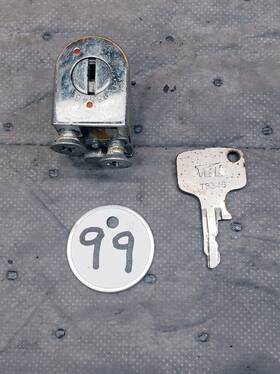
( Manufacturer Part Number: 35010-001-010 ), ( Part Type: Steering Lock ), ( Vintage Part: Yes ), ( Country Of Origin: Japan )
Review HONDA Steering Lock fits C70 C100 C110 CB100 CB125 CL100 CL125 CL70 CT200
The **Honda 35010-001-010 Steering Lock** is a precision-engineered, high-quality component designed exclusively for Honda motorcycles within the **C70, C100, C105, C110, C160, CB100, CB125, CL100, CL125, CL70, and CT200** series, ensuring seamless integration with these iconic models. Crafted from durable, corrosion-resistant materials, this steering lock is built to withstand the demands of daily riding while maintaining reliability and longevity. Its robust construction features a **tight-fitting, interference-free design**, preventing accidental steering movement when engaged, thereby enhancing security and reducing the risk of theft. The lock s smooth, low-friction mechanism ensures effortless operation, allowing riders to quickly secure their motorcycle without frustration. Engineered with Honda s signature attention to detail, this part is compatible with the original steering column interface, guaranteeing a perfect fit and hassle-free installation. Whether parked in a busy lot or left overnight, this steering lock provides peace of mind, acting as a deterrent against unauthorized use while preserving the integrity of your motorcycle s steering system. Its compact yet sturdy build ensures it remains unobtrusive yet highly effective, making it an essential accessory for riders who prioritize both convenience and security.
### **Pros and Cons of Buying a Used Honda CB750 Series (C70, C100, C105, C110, C160, CB100, CB125, CL100, CL125, CL70, CT200) with Steering Lock**
The Honda CB750 series, introduced in 1969, remains one of the most iconic and influential motorcycles ever made. Its legacy includes several variants, each with unique characteristics. Below is a detailed breakdown of the advantages and disadvantages of purchasing a used model from this lineup, followed by a conclusion and recommendation.
---
### **Pros of Buying a Used Honda CB750 Series**
1. **Legendary Reliability and Durability**
- Honda s reputation for engineering excellence means these bikes were built to last. Many original CB750s and later variants (C-series, CB100/125, CL-series) are still running strong after decades, especially if properly maintained.
- The CB750 s air-cooled, parallel-twin engine is robust and known for longevity, often exceeding 100,000 miles with basic care.
- Later models (e.g., CB1000F, CBR600RR) share Honda s reliability DNA, though they are not part of this specific series.
2. **Strong Resale Value and Collectibility**
- The CB750 and its variants (especially the original 1969 1978 models) are highly sought after by collectors, ensuring good resale value even after decades.
- Restored or well-maintained examples can appreciate in value, making them a sound long-term investment for enthusiasts.
3. **Classic Design with Timeless Appeal**
- The CB750 s aggressive, angular styling (especially the 1969 1978 models) remains iconic and instantly recognizable. Its design influenced generations of motorcycles.
- Later variants like the **C100/C105/C110** (custom cruiser versions) and **CL70/CL100/CL125** (naked/standard bikes) offer diverse riding positions, catering to different preferences.
- The **CT200** (a smaller, fuel-injected variant) provides a more modern entry point into the CB750 lineage.
4. **Mechanical Simplicity and Ease of Maintenance**
- The CB750 s design is straightforward, with fewer electronic components than modern bikes. This makes repairs and modifications easier for DIYers.
- Many parts are still widely available, though some rare variants (e.g., early C-series) may require specialty suppliers.
- The **steering lock** (a common feature on these bikes) is a practical safety addition, preventing accidental movement when parked.
5. **Versatile Riding Experience**
- The **CB750** is a sport-touring bike, offering a balance of speed, comfort, and handling. It s capable of highway cruising and track use with the right modifications.
- The **C-series** (custom cruisers) and **CL-series** (naked bikes) provide different riding postures, appealing to cruisers, sport riders, or casual riders.
- The **CB100/CB125** and **CT200** offer more modern features (e.g., fuel injection, ABS) while retaining the CB750 s DNA.
6. **Strong Community and Support**
- The CB750 has a passionate owner community, with forums (e.g., CB750.org), clubs, and meetups dedicated to these bikes. This makes finding parts, advice, and restoration help easier.
- Many mechanics and shops are familiar with Honda s classic designs, increasing the likelihood of quality service.
7. **Potential for Modifications and Customization**
- The CB750 s platform is highly modifiable. Owners can upgrade engines (e.g., big bore kits, turbocharging), suspension, brakes, and electronics.
- The **C-series** and **CL-series** are popular for custom builds, allowing riders to tailor the bike to their preferences.
- Later models (e.g., **CT200**) can be easily upgraded to modern standards (e.g., adding ABS, LED lighting).
8. **Lower Operating Costs (Compared to Modern Bikes)**
- Fuel efficiency is decent for its class (around 40 50 mpg for the CB750), though later models with fuel injection (e.g., CT200) may be slightly less efficient.
- Insurance and registration costs are often lower than for modern sport or touring bikes, especially for older models.
- Maintenance costs are minimal if the bike is well-maintained, though rare parts for very old models can be expensive.
9. **Historical Significance**
- Owning a CB750 or its variants is a piece of motorcycle history. The bike played a pivotal role in Honda s rise as a global manufacturer and influenced the sport bike market.
- For enthusiasts, the nostalgia and cultural impact of the CB750 make it a rewarding possession.
10. **Steering Lock as a Safety Feature**
- The steering lock (common on these bikes) prevents the bike from rolling when parked, which is particularly useful in urban environments or when leaving the bike unattended.
- This feature is rare on modern bikes, adding a practical and retro charm.
---
### **Cons of Buying a Used Honda CB750 Series**
1. **High Initial Cost for Well-Maintained Examples**
- Due to their collectibility, even used CB750s in good condition can be expensive. A restored or low-mileage example may cost **$8,000 $20,000 **, depending on the variant and condition.
- The **C-series** and **CL-series** are generally more affordable than the original CB750, but still pricey compared to modern entry-level bikes.
2. **Potential for Hidden Mechanical Issues**
- Like any older bike, the CB750 can develop problems if not properly maintained. Common issues include:- **Engine wear**: Pistons, rings, and bearings may need replacement after high mileage (100,000 miles).
- **Valvetrain wear**: Older models may require valve adjustments or replacements.
- **Gasket leaks**: Head gaskets, oil seals, and water pump seals can fail, leading to oil or coolant leaks.
- **Suspension degradation**: Forks and shock absorbers may need replacement after years of use.
- A thorough pre-purchase inspection (PPI) is **essential** to avoid costly repairs.
3. **Outdated Safety Features**
- The original CB750 lacks modern safety features such as:- **ABS** (available on later models like the **CT200** but not standard).
- **Traction control** or **slippery road indicators**.
- **Modern braking systems** (early models have drum brakes on the rear).
- Riding dynamics may feel less refined compared to modern bikes, especially at high speeds.
4. **Fuel Injection Issues (On Older Models)**
- The original CB750 uses a carbureted system, which can be finicky and less efficient than modern fuel injection.
- Later variants like the **CT200** use fuel injection, which is more reliable but may still require occasional tuning.
5. **Weight and Handling Limitations**
- The CB750 is heavier than modern sport bikes (around **470 500 lbs**), which can make it less nimble in tight corners or on twisty roads.
- The **C-series** and **CL-series** are slightly lighter but still not as agile as modern naked bikes.
- The **steering lock** can be an inconvenience if not used properly, as it may require extra effort to unlock the bike.
6. **Parts Availability and Costs**
- While many parts are still available, some rare components (e.g., for the **C100/C105**) can be difficult or expensive to source.
- Rebuilding or restoring a rare variant may require sourcing parts from specialty suppliers or eBay, increasing costs.
7. **Environmental and Noise Regulations**
- Older CB750s may not meet modern noise or emissions standards in some regions, requiring modifications (e.g., muffler upgrades) to comply with local laws.
- Some areas have restrictions on classic bikes, so it s important to check local regulations before purchasing.
8. **Limited Modern Comfort Features**
- Compared to modern bikes, the CB750 lacks:- **Adjustable ergonomics** (seat height, handlebar positions).
- **Wind protection** (early models have minimal fairings).
- **Advanced rider aids** (e.g., cruise control, digital dashboards).
- Riding comfort may be less refined, especially on long trips.
9. **Insurance and Registration Costs**
- While often cheaper than modern sport bikes, insurance for a classic CB750 can be **moderate to high**, depending on the model s value and your location.
- Some insurers may classify it as a "collector s item," leading to higher premiums.
10. **Not Ideal for Beginners**
- The CB750 s power delivery (especially the original 50 HP models) can be overwhelming for
Details:
part #: 35010001010 prices
- $17.99-$273.38
specifications fendeframat:
- for models: C70, C100, C110, Cb100, Cb125, Cl100, Cl125, Cl70, Ct200
- for makes: Honda
- mpn: 35010-001-010
- part type: Steering Lock
- vintage part: Yes
- country of origin: Japan
offer fendeframat:
- sold: 0
- best offers: True
- availability: In Stock
- options: Ship-to-home
- started: February 9, 2026
- quantity: 1
returns fendeframat:
- time: 30 Days
- policy: Returns Accepted
- paid by: Buyer
shipping fendeframat:
- cost: $0.00
- carrier: USPS
- type: Calculated
- class: Standard
- transit: 3-8 Days
- service: USPS Ground Advantage
payments fendeframat:
- other
- wallet: Apple-pay
- credit card: Visa
general fendeframat:
- Motorcycle Scooter Parts Accessories > Body Frame > Other Body Frame
- condition: Used
seller fendeframat:
- # reviews: 2751
- rating: 100.0%
- city: Spokane, Washington
Honda 35010-001-010 Is Similar To:
- Pivot Works Mn 85m5 Steering Stem Bearing Kit For 1990-1991 Honda Cr250r Control Pp (14.7% similar) Pivot works steering stem bearing kit for 1990 -1991 honda CR250R - control pp: status: in stock...(August 9th, 2024)
- Honda 53700-mfj-d01 13-22 Cbr600rr Oem Kyb Steering Damper Stabilizer (38.5% similar) The damper has all the tabs intact. 13-22 honda CBR600RR oem KB steering damper stabilizer 53700-MFJ-D01. This damper is in good condition and shows normal signs of wear. Removed from: 2016 honda CBR600RR with 6,279 miles. Over 99% of our orders are shipped within 24HRS...(August 20th, 2024)
- All Balls 22-1002 Steering Stem Bearing Seal Kit For Honda Ct90 Trail 66-79 (20.4% similar) Unit type, part item condition new, mpn 22-1002, voltage , rotation, amperage, starter clock, teeth, pulley class, regulator, fan color, gear id, od, kw, pinion/splines warranty. This will usually be total power parts or may in some cases a third party. The cost of foreign products and services may...(August 28th, 2024)
- All Balls Mn wtc6 Steering Stem Bearing Kit For 1988-2007 Honda Vt600c Shadow Vlx By (20.2% similar) All balls steering stem bearing kit for 1988 -2007 honda VT600C shadow LX - by: status: in stock...(September 8th, 2024)
- All Balls Mn 404c Steering Stem Bearing Kit For 1998-2003 Honda Vt750c Cd Shadow Ace Ko (20.1% similar) All balls steering stem bearing kit for 1998 -2003 honda VT750C CD shadow ace KO: status: in stock...(September 11th, 2024)
- All Balls Mn j82w Steering Stem Bearing Kit For 1985-1986 Honda Atc350x Control Hs (20.5% similar) All balls steering stem bearing kit for 1985 -1986 honda ATC350X - control HS: status: in stock...(September 13th, 2024)
- All Balls 22-1029 Steering Stem Bearing Seal Kit For Honda Tlr200 Reflex 86-87 (17.6% similar) All balls steering stem bearing seal kit for honda ATC200X 1983 , ATC250ES 1985 menu. Electrical aftermarket parts for virtually any vehicle total power is a leading source rotating electrical products autos, trucks, motorcycles, ATV, farm tractors and many other vehicles. The cost of foreign ...(September 15th, 2024)
- All Balls 22-1011 Steering Stem Bearing Seal Kit For Honda Cb450k1-k2 68-69 (20.4% similar) Specifications: CONTAINS:1 miscellaneous part, 2 seals, tapered bearings, 1 washer, notes:- kits contain upper and lower tapered bearing sets cup cone along with specially designed seals to keep water dirt out grease in. All balls steering stem bearing seal kit for honda CB360 1974 -1977, CB400A ...(September 16th, 2024)
- Boss Bearing 41-6246b Steering Stem Seal For Honda Xr350r 1983-1985 (21.4% similar) Free USPS shipping anywhere in the us, including ak, hi and pr. Fast and friendly service. This means combined shipping is free also since. Steering stem bearing seal for honda XR350R 1983 -1985: $38.95: ships same day from NC. Expedited shipping is offered using USPS express for an extra fee...(September 24th, 2024)
- All Balls 22-1021 Steering Stem Bearing Seal Kit For Honda Xlr125 Euro 98 (19.4% similar) Unit type, part item condition new, mpn 22-1021, voltage , rotation, amperage, starter clock, teeth, pulley class, regulator, fan color, gear id, od, kw, pinion/splines warranty. The cost of foreign products and services may fluctuate. This will usually be total power parts or may in some cases a ...(October 4th, 2024)
- All Balls Mn 7e3d Steering Stem Bearing Kit For 1984 Honda Gl1200 Gold Wing Pi (18.6% similar) All balls steering stem bearing kit for 1984 honda GL1200 gold wing - pi: status: in stock...(October 7th, 2024)