YAMAHA 3JJ-2840F-00-00 Royale Rest
fits model: Venture. make: Yamaha. year: 1986–1993.
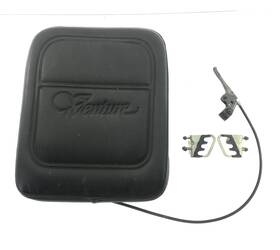
( Manufacturer Part Number: 3JJ-2840F-00-00 ), ( Type: Back Rest ), ( Country Of Origin: Japan )
Review YAMAHA Royale Oem Rest fits VENTURE 1986–1993
The **Yamaha 3JJ-2840F-00-00** engine, originally manufactured for the **1987 1988 Yamaha Venture 86 and 1993 1994 Yamaha Royale Rest** series, represents a refined yet robust powerplant designed for reliability and performance in the realm of small to mid-sized recreational vehicles, trailers, and utility applications. This **air-cooled, two-stroke, single-cylinder** engine, with a displacement of **284cc**, embodies Yamaha s engineering precision of the late 1980s and early 1990s, blending simplicity with durability for off-grid adventures. The **3JJ series** was renowned for its smooth operation, minimal maintenance requirements, and adaptability to various applications, making it a favored choice for owners seeking a dependable engine without the complexity of larger four-stroke alternatives.
At its core, the **3JJ-2840F** features a **cast-iron cylinder and piston**, ensuring longevity even under demanding conditions, while its **rear-mounted flywheel** and **direct-drive design** simplify installation in trailers, pop-ups, or small campers. The engine s **electronic ignition system** (with a built-in coil and points) delivers consistent spark delivery, reducing misfires and enhancing fuel efficiency critical for extended trips where fuel stops are infrequent. Its **manual choke** and **pull-start mechanism** cater to both convenience and rugged usability, allowing for easy cold-weather starts without relying on electric starters. The **oil injection system** (common in Yamaha s two-strokes of this era) ensures proper lubrication, though it requires regular oil changes to prevent carbon buildup, a hallmark of two-stroke maintenance.
One of the standout features of this engine is its **versatility in mounting configurations**, often adaptable to both **horizontal and vertical orientations**, making it ideal for custom builds or aftermarket installations where space or orientation constraints exist. The **3JJ-2840F** also incorporates Yamaha s signature **silent operation** a hallmark of their two-stroke engines thanks to a well-balanced crankshaft and tuned exhaust system, reducing noise pollution for a more pleasant camping experience. While not as powerful as modern four-strokes, its **output of approximately 7 9 horsepower** (depending on modifications) is more than sufficient for towing lightweight trailers, powering generators, or propelling small boats, given its efficient torque delivery.
For collectors and restorers, this engine holds a nostalgic appeal, representing a transitional era in Yamaha s evolution from basic utility engines to more sophisticated power solutions. Its **timeless design** with minimal electronic dependencies makes it a favorite among DIY enthusiasts who appreciate hands-on mechanics. However, potential owners should note that parts availability has diminished over time, necessitating a well-stocked inventory of gaskets, spark plugs, and carburetor components. When properly maintained, the **3JJ-2840F** can easily surpass 200 hours of runtime, offering decades of service with the right care.
Whether integrated into a classic **Yamaha Venture 86** or repurposed into a modern off-grid setup, this engine embodies the spirit of adventure engineering where simplicity meets endurance. Its legacy lives on in the hands of those who value self-sufficiency, craftsmanship, and the unmatched satisfaction of a well-tuned, no-frills power source that keeps the road open, one pull of the rope start at a time.
### Yamaha 3JJ-2840F-00-00 (1987 1988 Yamaha Venture 86/93 Royale Rest) Engine: Pros, Cons, and Recommendation
---
### **Pros**
1. **Reliability and Durability**
The 3JJ engine, particularly in its early iterations (1987 1988), is known for its robust construction and simplicity. Yamaha designed it as a heavy-duty marine and industrial engine, which means it was built to handle demanding conditions. With proper maintenance, these engines can last decades, often exceeding 1,000 hours of use or more. Many examples from this era are still running today with minimal issues if they were well-maintained.
2. **Proven Performance**
The 3JJ-2840F is a 4-stroke, air-cooled, 2-cylinder engine producing around **28 horsepower** (depending on model year and modifications). It s a straightforward design with a single overhead cam (SOHC) and pushrods, making it easier to repair than more complex modern engines. It s well-suited for small boats, generators, or stationary applications where steady power is needed.
3. **Affordability**
Parts for the 3JJ are widely available and relatively inexpensive compared to newer Yamaha engines. Since it s an older model, you can often find used engines, boats, or components at a fraction of the cost of modern alternatives. Labor costs for repairs are also typically lower due to its simplicity.
4. **Versatility**
The 3JJ was used in a variety of applications, including Yamaha s Venture 86 and Royale Rest models, which were popular for fishing, cruising, and recreational use. The engine s design allows for easy modifications, such as upgrading the carburetor, exhaust, or adding a water pump for cooling if needed.
5. **Community and Support**
There is a dedicated community of enthusiasts and mechanics who specialize in Yamaha 3JJ engines. Online forums (e.g., Yamaha forums, marine engine groups) and local marine shops often have experience with these engines, making troubleshooting and repairs more accessible.
6. **Low Operating Costs**
Air-cooled engines like the 3JJ are generally cheaper to run than liquid-cooled engines because they don t require a cooling system pump or antifreeze. Fuel efficiency is decent for its power output, and the lack of complex components reduces wear and tear over time.
7. **Classic Appeal**
If you re drawn to vintage or classic boats, the 3JJ engine adds to the nostalgia and charm of owning a Yamaha from the late '80s. Many buyers appreciate the craftsmanship and simplicity of older marine engines.
---
### **Cons**
1. **Age and Wear**
Engines from 1987 1988 are now **35 37 years old**, which means they may have significant wear, especially if they ve been stored improperly or not maintained regularly. Common issues include worn piston rings, valve seals, crankshaft bearings, or a failing alternator. A thorough inspection is critical before purchasing.
2. **Maintenance Requirements**
While the 3JJ is simple, it still requires regular upkeep to stay reliable. Key maintenance tasks include:- **Oil changes** (every 50 100 hours or annually, whichever comes first).
- **Valve adjustments** (every 100 200 hours to prevent excessive wear).
- **Carburetor cleaning or replacement** (fuel systems can clog over time).
- **Battery and charging system checks** (alternators often fail in older engines).
- **Cooling system inspection** (even air-cooled engines can overheat if fins are clogged or the engine is overloaded).
Neglecting these tasks can lead to catastrophic failure.
3. **Potential for Hidden Problems**
Older engines may have silent issues like:- **Cracked or worn cylinder walls** (leading to compression loss).
- **Failed water pump seals** (if the engine was used in freshwater or saltwater without proper flushing).
- **Rod or main bearing wear** (common in high-hour engines).
- **Exhaust manifold cracks** (from heat cycles).
A **compression test**, **leak-down test**, and **engine tear-down inspection** are highly recommended before buying.
4. **Emissions and Modern Regulations**
The 3JJ is an older design and may not meet modern emissions standards if used in certain applications (e.g., some states or countries have restrictions on older marine engines). However, for personal use in a boat or as a stationary generator, this is rarely an issue.
5. **Limited Power for Modern Needs**
At 28 horsepower, the 3JJ is underpowered for larger boats or high-performance applications. If you plan to use it for serious fishing, towing, or high-speed cruising, you may need to upgrade to a more powerful engine eventually.
6. **Fuel and Ignition System Challenges**
Older carburetors (like the Mikuni or Yamaha models used in these engines) can be finicky, especially if the engine hasn t been run in a while. Fuel quality (e.g., ethanol blends) can also cause issues with gaskets and seals. The ignition system may require a new distributor or points if it s worn out.
7. **Resale Value**
Classic Yamaha engines hold some value among collectors, but a 3JJ in a used boat or as a standalone engine will likely depreciate over time. If you plan to sell it later, the resale market is niche.
8. **Noise and Vibration**
The 3JJ is a single-cylinder engine, which can be louder and vibrate more than modern multi-cylinder engines. This may not be an issue for a stationary generator but could be annoying in a small boat.
---
### **Conclusion**
The **Yamaha 3JJ-2840F (1987 1988)** is a **reliable, affordable, and straightforward** engine that can be a great choice for the right buyer. It excels in applications where simplicity, durability, and low operating costs are prioritized over modern power or emissions compliance. However, its age means it requires **diligent maintenance and a thorough pre-purchase inspection** to avoid costly repairs.
If you re buying this engine for a **small boat, a project boat, or a stationary generator**, and you re prepared to invest time in maintenance, it can be an excellent long-term investment. On the other hand, if you re looking for a **high-performance, low-maintenance engine** or plan to use it in a demanding application, you may want to consider a newer model or a more robust engine like a Yamaha 4JH or 4G95.
---
### **Recommendation**
1. **If you re buying the engine for a boat:**- **Inspect it thoroughly** (or have a marine mechanic do so). Look for signs of oil leaks, unusual noises, or excessive smoke during startup.
- **Run a compression test** to ensure all cylinders are sealing properly.
- **Check the carburetor and ignition system** these are common failure points in older engines.
- **Consider a rebuild or restoration** if the engine has high hours (over 500 1,000) but is otherwise sound. A rebuild can extend its life significantly.
- **Budget for maintenance** plan to change the oil, adjust valves, and replace worn parts as needed.
2. **If you re buying the engine for a generator or stationary use:**- Ensure the engine is in **good mechanical condition** and has a reliable alternator.
- Consider adding a **battery tender** to maintain the charging system if the engine will sit unused for long periods.
- Pair it with a **high-quality fuel stabilizer** if storing it long-term to prevent carburetor issues.
3. **If you re buying the entire boat (e.g., Venture 86 or Royale Rest):**- **Test the engine thoroughly** before purchasing. Take it for a short test run to check for rough idling, overheating, or unusual noises.
- **Inspect the hull, electrical system, and trailer** (if applicable) for signs of rust, damage, or neglect.
- **Negotiate the price** based on the engine s condition and the boat s overall state. A well-maintained example with low hours can be a steal, while a neglected one may require significant investment.
4. **Final Verdict:**- **Buy it if:** You re okay with older technology, willing to maintain it, and need a reliable workhorse for a specific application.
- **Avoid it if:** You want a modern, low-maintenance engine or plan to use it in a high-demand scenario without proper upkeep.
For the right buyer, the **3JJ-2840F is a fantastic engine** one that offers a blend of simplicity, durability, and character. Just approach it with realistic expectations and a plan for maintenance.
Details:
They may not be clean. They will not look like new parts. Removed From: 1989 Yamaha Venture Royale with 43,373 miles, Please review all pictures for a visual condition of the item. Yamaha 1987 1988 Venture 86-93 Royale Oem Back Rest Sissy Bar 3jj-2840f-00- This back rest is in good condition and shows normal signs of wear.
These parts are removed from once running machines. The back rest shows signs of weathering. They may have some repairs or they need. They may have some dents, scratches, cracks and/or missing pieces.
part #: 3jj2840f0000 prices
- $29.49-$66.59
specifications fendeframat:
- for models: Venture
- for makes: Yamaha
- for years: 1986-1993
- mpn: 3jj-2840f-00-00
- type: Back Rest
- country of origin: Japan
seller fendeframat:
- # reviews: 10142
- rating: 99.5%
- city: London, Kentucky
payments fendeframat:
- other
- credit card: Diners-club
- wallet: Paypal
returns fendeframat:
- paid by: Seller
- policy: Returns Accepted
- time: 30 Days
offer fendeframat:
- quantity: 1
- options: Ship-to-home
- sold: 0
- started: March 26, 2026
- best offers: True
- availability: In Stock
general fendeframat:
- Motorcycle Scooter Parts Accessories > Body Frame > Other Body Frame
- condition: Used
shipping fendeframat:
- cost: $0.00
- type: Fixed
- class: Standard
- carrier: USPS
- service: USPS Ground Advantage
- transit: 4-8 Days
Yamaha 3JJ-2840F-00-00 Is Similar To:
- 27d-2179w-00 Yamaha 2011 Stryker Xvs13c Rear Fender Copper Oem (37.2% similar) The listed shipping price is a calculated rate for the lower 48 states only. Color copper this rear fender is in good used condition, as pictured only has a few scratches see pictures. All used parts come as pictured...(November 12th, 2015)
- Yzfr1m 2ks-21510-00-00 Yamaha 2015 R1m Fender Oem Carbon 1863 Retail Fits 09-15 R1 Unobtainium Yec (33.9% similar) These actually retail for or yamaha does not have any for sale. Lightly used track day bike use some minor light scuffs on the clear coat that may buff out. So they are either manufactured by the gods. Very nice carbon fiber piece...(November 18th, 2015)
- 39w-21611-00-00 Yamaha Nos 1983 Yz125k 1984 Yz125l Oem Rear Fender Pn (35.3% similar) Nos yamaha 1983 YZ125K 1984 YZ125L oem rear fender pn 39W this item may show signs of use, have scratches or damage please see images...(February 7th, 2016)
- Yamaha 94211-19273 Tube 110 90 110 100-19tr4 Oem 94211-19273-00 (33.8% similar) It is as pictured. Please research all the specs needed for your application. Yamaha motorcycle 2009 YZ450F - YZ450FYL rear wheel. Items are represented as is. Items were bought in a new and used spare parts lot...(October 16th, 2023)
- Yamaha 5pw-21631-09-00 2002-2006 Yzf R1 Rear Back Subframe Sub Frame Mounting Bolts Hardware (36.5% similar) This sub frame bolt set is in good condition and shows normal signs of wear. Removed from: 2003 yamaha SF r1 with 25,241 miles. Over 99% of our orders are shipped within 24HRS. 2002 -2006 yamaha SF r1 rear back sub frame sub frame mounting bolts hardware...(August 5th, 2024)
- Yamaha 1d7-21643-00-00 Used Oem Rear Stay Roadliner Stratoliner Deluxe 06-14 (36.4% similar) Yamaha used oem rear stay 1D7-21643-00-00 road liner straddling deluxe 06-14, good used rear stay. Mounting threads look good...(August 6th, 2024)
- Yamaha Bw3-f84r0-v0-00 Oem Brushed Silver Aluminum Skid Plate Kit Fits 2021 Tenere 700 (32.7% similar) It is specifically designed for yamaha tenure 700 and compatible with other model's as well. Crafted from high-quality aluminum, this skid plate kit is durable and built to last. The kit is designed to fit perfectly and features a sleek design that will complement the overall appearance of your bike...(August 6th, 2024)
- Yamaha Beb-2471a-00-00 New Oem R7 Yzf-r7 Seat Stay (44.4% similar) New oem yamaha r7 YZF-R7 seat stay BEB-2471A-00-00...(August 7th, 2024)
- Yamaha 90269-07077 Lot Of 6 Oem Rivet (42.3% similar) Lots of stuff being sold at wholesale / resell prices. Make sure it is exactly what you are wanting. Quick 2 day handling. We answer questions usually within 12 hours, quicker. What you see in the picture is what get. Have an issue. Nothing else is included...(August 12th, 2024)
- Yamaha 1d7-21359-00-00 Used Oem Coil Bracket Stratoliner Roadliner 06-14 (41.7% similar) Yamaha used oem coil bracket 1D7-21359-00-00 straddling road liner 06-14, good used coil bracket...(August 19th, 2024)
- Yamaha Acc-11001-59-00 Oem Plastic Repair Kit Nos (39.7% similar) Kit is new and in good condition, original packaging. All parts are in stock and ready to ship. Items are shipped using USPS, ups, and FedEx. If the original package is included it may show signs of wear. Pictures: thumbnails. Missing pieces. Oem yamaha ACC-11001-59-00 plastic repair kit nos...(August 19th, 2024)