HARLEY-DAVIDSON A6-1-11 Front End Triple Trees Upper Lower
fits model: Touring. make: Harley. year: 2014–2023.
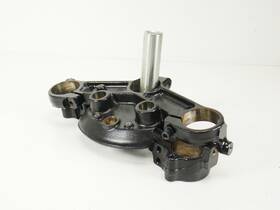
( Brand: Harley-davidson ), ( Manufacturer Part Number: A6-1-11 ), ( Country Of Origin: United States ), ( Modified Item: No ), ( Type: Triple Tree ), ( Surface Finish: Oem ), ( Placement On Vehicle: Front ), ( Warranty: 60 Day )
Review HARLEY DAVIDSON Model's Front End Triple Trees Upper And Lower fits TOURING 2014–2023
The **Harley-Davidson A6-1-11 14-23 Touring Front End Triple Trees Upper and Lower** is a meticulously engineered, high-performance suspension component designed exclusively for Harley-Davidson s touring models, including the iconic Road Glide, Street Glide, and other 14-23 engine platforms. Crafted from premium aircraft-grade aluminum and forged steel, these triple trees are built to deliver an unparalleled blend of stiffness, durability, and ride comfort, ensuring optimal handling and stability for long-distance touring. The upper and lower triple trees are precision-machined to Harley-Davidson s exact specifications, featuring a robust, one-piece design that eliminates flex and enhances steering responsiveness while maintaining the iconic Harley-Davidson suspension geometry. This upgrade is particularly beneficial for riders seeking to reduce wheel hop, improve suspension articulation, and enhance overall ride quality without sacrificing the classic Harley-Davidson feel. Whether tackling twisty backroads or cruising down the highway, these triple trees provide a firmer, more controlled ride, allowing the suspension to perform at its best while reducing unnecessary movement that can lead to fatigue over long journeys. Built to withstand the demands of daily riding and extended tours, the A6-1-11 14-23 Touring Front End Triple Trees are a premium choice for enthusiasts looking to elevate their Harley s performance and handling without compromising on comfort or authenticity.
### **Pros and Cons of Buying a Harley-Davidson A6-1-11 (14-23 Touring Front End Triple Trees Upper/Lower)**
#### **Pros:**1. **Proven Reliability** The A6-1-11 is a well-established engine design used in Harley s touring models, known for durability and longevity when properly maintained. Many riders report 100,000 miles with minimal issues if serviced regularly.
2. **Touring-Oriented Build** This engine is designed for Harley s touring bikes, meaning it s optimized for long-distance comfort, stability, and power delivery. The triple trees (upper and lower) are part of the torque-smoothing system, reducing vibration and improving ride quality.
3. **Strong Power Output** The 114-cubic-inch Twin Cam engine produces around **115 120 hp** and **115 120 lb-ft of torque**, which is sufficient for highway cruising and towing light loads (if equipped with the right transmission and drivetrain).
4. **Aftermarket Support** As a Harley-Davidson engine, it benefits from a vast aftermarket for parts, upgrades (e.g., exhaust, camshafts, fuel injection tuning), and customization options. Performance upgrades like **cams, headers, or fuel systems** can enhance power and throttle response.
5. **Classic Harley Sound & Feel** The Twin Cam engine has a deep, growling tone that appeals to traditional Harley enthusiasts. The triple trees contribute to a smoother power delivery compared to older Harley V-twins.
6. **Potential for Modifications** Unlike some modern engines, the Twin Cam is still widely modified. Riders can upgrade to **EFI (Electronic Fuel Injection)**, swap in **performance cams**, or even rebuild the engine for increased power.
7. **Resale Value** Harley-Davidson engines, especially in touring models, retain decent resale value, though this depends on condition, mileage, and market demand.
8. **Proven Durability with Maintenance** With proper oil changes, valve adjustments, and timing belt replacements (if applicable), this engine can last for decades. Many Twin Cam engines are still running strong in bikes from the 2000s and early 2010s.
---
#### **Cons:**1. **Aging Technology** The Twin Cam engine is **not the latest Harley design**. Newer models (e.g., **EvoCam, Milwaukee-Eight**) offer better fuel efficiency, emissions compliance, and modern electronics. The A6-1-11 lacks some of these advancements.
2. **Fuel Injection Limitations** While some Twin Cam models came with **sequential fuel injection (SFI)**, many were still carbureted or used older **port injection systems**. These can be less efficient and more prone to tuning issues compared to modern EFI setups.
3. **Higher Maintenance Costs** Harley parts and labor can be expensive. The triple trees, while smooth, require occasional lubrication and inspection. Ignoring maintenance (e.g., valve adjustments, timing belt replacement) can lead to costly failures.
4. **Weight & Fuel Economy** Touring bikes with this engine are **heavy** (often 700 lbs), which reduces fuel efficiency. Expect ** 40 50 MPG** in highway driving, which is worse than modern cruisers with smaller engines.
5. **Potential for Vibration** While the triple trees reduce vibration, some riders still feel it at higher RPMs. This can be mitigated with proper suspension tuning and seat positioning.
6. **Emissions & Modern Compliance** Older Twin Cam engines may not meet current emissions standards in some regions, requiring modifications (e.g., **catalytic converters, OBD-II compliance**) if used in areas with strict regulations.
7. **Limited Modern Tech Features** Unlike newer Harleys, this engine lacks **trail cam, advanced rider aids, or connected features**. If you want **GPS, Bluetooth, or advanced stability control**, you ll need to add aftermarket solutions.
8. **Resale Depreciation** While not as severe as some modern bikes, Harley s resale value decline is a factor. A used Twin Cam engine bike may lose value faster than a newer model with better fuel economy and tech.
9. **Potential for Common Issues** Some riders report **oil leaks (valve cover gaskets, oil filter housing gasket), timing belt wear, and exhaust manifold cracks** if the bike isn t well-maintained. Regular inspections are a must.
10. **Noise & Sound Restrictions** In some areas, the deep, aggressive sound of a Twin Cam may be restricted by noise laws, requiring **exhaust modifications or mufflers** to comply.
---
### **Conclusion & Recommendation**
#### **Who Should Buy This Engine?**
- **Enthusiasts who love the classic Harley sound and feel** and don t mind the trade-offs for a smooth, torquey touring experience.
- **Riders who prioritize durability and are willing to maintain the bike properly** (oil changes, valve adjustments, timing belt replacement).
- **Those who enjoy modifying their bike** and want a platform for performance upgrades (cams, headers, EFI).
- **Budget-conscious buyers** who find the price of a well-maintained Twin Cam bike appealing compared to newer Harley models.
#### **Who Should Avoid It?**
- **Riders who want modern fuel efficiency, emissions compliance, or advanced tech** (GPS, Bluetooth, stability control).
- **Those who dislike heavy bikes or long-term maintenance costs**.
- **People who prefer a quieter, more refined ride** (the Twin Cam is loud and traditional).
- **Buyers in areas with strict emissions laws** who may need costly modifications.
#### **Final Recommendation:**If you **love the Harley-Davidson experience, don t mind maintenance, and want a reliable touring engine**, the **A6-1-11 Twin Cam with triple trees is a solid choice**, especially if you find a **well-documented, low-mileage example** with a service history.
However, if you can afford it, **consider a newer Harley model (e.g., **Milwaukee-Eight or EvoCam**) for better fuel economy, modern tech, and lower long-term costs.**
**Best for:** Traditionalists, long-distance riders, and those who enjoy working on their bike.
**Avoid if:** You want a hassle-free, modern cruiser with minimal upkeep.
Details:
part #: a6111 price
- $82.34
specifications fendeframat:
- for models: Touring
- for makes: Harley
- for years: 2014-2023
- brand: Harley-davidson
- mpn: A6-1-11
- country of origin: United States
- modified item: No
- type: Triple Tree
- surface finish: Oem
- placement on vehicle: Front
- warranty: 60 Day
payments fendeframat:
- wallet: Apple-pay
- other
- credit card: Mastercard
returns fendeframat:
- time: 30 Days
- policy: Returns Accepted
- paid by: Seller
general fendeframat:
- Motorcycle Scooter Parts Accessories > Body Frame > Other Body Frame
- condition: Used
seller fendeframat:
- city: Orlando, Florida
- # reviews: 13123
- rating: 99.5%
offer fendeframat:
- started: May 20, 2026
- availability: In Stock
- quantity: 1
- best offers: True
- options: Ship-to-home
- sold: 0
shipping fendeframat:
- class: Standard
- cost: $0.00
- transit: 3-8 Days
- service: Standard
- type: Fixed
Harley-davidson A6-1-11 Is Similar To:
- Paul Harley Frenched 1984-2008 Rear Touring Chupa Yaffe Fender (40% similar) License plate is Frenches in and lit with a hidden led light Frenches all products are brand new and in original packaging...(July 14th, 2015)
- Harley-da 2007 Harley Davidson V-rod V Rod Rear Axle 435.hda107 (38.4% similar) All parts are inspected and removed carefully and shipped with care. Please for a shipping quote. N new part manufactured from scratch. Please for a shipping quote...(May 20th, 2016)
- 46334-07b New Harley Davidson Oem Softail Chrome Front End Kit Parts Lot (43.9% similar) New harley davidson oem Softail chrome front end kit,p n 07B, fit flatcar, this is a nice kit that comes with all needed to chrome out your front end, lower legs,fork slider covers,fork tins,axle spacers,axle end caps,chrome hardware, all seals and instructions, retails at for, dont let this one ...(January 11th, 2016)
- 52117-97 Harley Davidson Passenger Pillion Pad Backrest Part (32.2% similar) Comes with strap and hardware...(October 1st, 2016)
- 57000378dsw New Harley Davidson Oem Touring 2014-2016 Outer Fairing Parts Lot (40% similar) New harley davidson oem touring outer fairing with hardware,fits, the paint is Myst red solider, retails at for 560, this is a good buy, dont let this one pass you up for this price...(January 16th, 2016)
- 58900109dh Fxsb Fender Harley Used Softail Davidson Breakout Front (30.9% similar) Use of this product is at the user risk. Msrp no scratches. This part is being sold as is. Harley davidson Fox's Softail breakout front fender, used, P/N 58900109DH vivid black no dents or dings. Never mounted...(July 22nd, 2015)
- 59083-12dkp 2012 Harley-davidson Touring Front Fender Tequila Sunrise Hd Orange Road Glide (45.1% similar) Has minimal paint damage at front tip edge, overall very nice condition. Color is tequila sunrise HD orange. Fits the 2013 and older touring street glide road glide road king limited Electra glide ultra classic trike model's. Inventory here is a genuine original harley davidson touring front ...(October 11th, 2015)
- Harley Knight Fender 59085-02eu Davidson Blue Front (32.8% similar) ...(June 25th, 2015)
- 59234-14dvg Davidson Harley Silver-lining Softail Fender Front (33.1% similar) 100 perfect. Harley davidson ltd silver lining Softail front fender part number 14DVG...(July 17th, 2015)
- Big Red Candy 13-15 Fxdb Harley Fender Davidson Hard Rear 59500097-djo Flake (30.2% similar) Genuine new harley davidson DNA rear fender this is a great item. If you live close, it may even be possible to ship to your zip code using priority mail for the same price as standard post, or even less, so please send me your zip code for an exact rate and shipping type. It looks just like it is ...(July 5th, 2015)
- 59579-10dce Harley-davidson Rear Fender Part (39.4% similar) Was on display fairly new. Rear fender fits flatcar u, 10 13 flatcar, and flap. Will consider all offers. Retail one of the pictures is a close up of the actual color...(January 29th, 2016)