HUSQVARNA 2199864 Rear Axle
fits model: Wr250. make: Husqvarna. year: 1972.
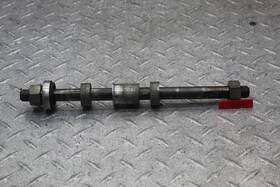
( Manufacturer Part Number: 2199864 ), ( Type: Air Cleaner Case )
Review HUSQVARNA Rear Axle fits WR250 1972
The **Husqvarna 2199864 1972 WR250 Rear Axle** is a meticulously crafted, high-performance component designed for the legendary **Husqvarna WR250** off-road motorcycle, originally produced in the early 1970s. This rear axle assembly represents a blend of Swedish engineering precision and rugged durability, built to withstand the demands of demanding trails, competitive motocross, and hard-core enduro riding. Crafted from high-grade steel, the axle features a robust, drilled design that ensures optimal weight distribution while maintaining structural integrity under extreme stress. The **1972 WR250** was renowned for its lightweight frame and aggressive handling, and this axle plays a critical role in preserving the bike s original performance characteristics delivering smooth power transfer from the transmission to the rear wheel while minimizing flex or vibration. The assembly includes a **spline-drive shaft** and a **rear sprocket hub**, both integral to the bike s drivetrain efficiency, ensuring reliable engagement with the chain and wheel assembly. Whether restoring a classic WR250 to its former glory or upgrading an existing setup for enhanced durability, this axle is a direct-fit replacement that adheres to the original specifications, guaranteeing compatibility with the bike s suspension, swingarm, and wheel bearings. Its timeless design reflects Husqvarna s commitment to off-road innovation during an era when the brand was pioneering the evolution of modern motocross and enduro motorcycles. For collectors, restorers, and enthusiasts seeking authenticity, this rear axle is not merely a functional part but a piece of automotive history that embodies the spirit of adventure and mechanical excellence that defined Husqvarna s legacy.
### Pros and Cons of buying a Husqvarna 2199864 1972 WR250 Rear Axle
#### **Pros:**1. **Rarity and Collectibility** The 1972 Husqvarna WR250 is a classic off-road motorcycle, and its parts, including the rear axle, are highly sought after by collectors and enthusiasts. Owning a genuine, original part adds value to a restored or preserved bike.
2. **Original Equipment Quality** Husqvarna was known for durable, well-engineered components in its prime. The rear axle from this era was built to last, especially if it was part of a well-maintained bike. The materials and machining standards from the early 1970s were robust for their time.
3. **Restoration Potential** If you re restoring a 1972 WR250, having an original rear axle ensures authenticity. Many aftermarket or modern replacements may not match the exact fit or feel of the original, which can be important for purists.
4. **Historical Significance** The WR250 was a competitive off-road bike in its day, and owning a part from this model connects you to the motorcycle s racing heritage. This can be appealing to historians or fans of vintage motocross.
5. **Potential for Resale Value** If the bike or parts are in excellent condition, the rear axle could retain or even appreciate in value over time, especially in niche markets.
6. **Compatibility with Other Husqvarna Models** The WR250 s rear axle may be compatible with other Husqvarna models from the same era, expanding its usefulness if you own or plan to own multiple vintage bikes.
---
#### **Cons:**1. **Age and Wear** The axle is nearly 50 years old, which means it may show signs of wear, corrosion, or degradation. Rust, bent components, or worn bearings are common issues with parts from this era, requiring inspection and possibly restoration before use.
2. **Lack of Modern Standards** Modern manufacturing techniques, materials, and quality control standards are far superior to those of the 1970s. The axle may not meet today s safety or durability expectations, especially if used in high-stress applications like competitive riding.
3. **Difficulty in Sourcing** While the part is desirable, finding a high-quality, undamaged example can be challenging. Many sellers may not provide full documentation or history, leaving you to verify its condition yourself.
4. **Cost vs. Value** Original vintage parts can be expensive, especially if they re rare or in demand. You may pay a premium for the nostalgia factor, which might not justify the cost if you re not restoring or collecting.
5. **Maintenance and Repair Challenges** Working with a 50-year-old part may require specialized tools, knowledge, or even custom fabrication to ensure proper fitment. You may need to source replacement bearings, seals, or other components that are no longer in production.
6. **Limited Availability of Spare Parts** If the axle fails or needs replacement parts, finding compatible components (e.g., bearings, springs, or fasteners) may be difficult. You might need to rely on aftermarket alternatives, which could compromise authenticity.
7. **Reliability Concerns** Unless the axle has been meticulously maintained and restored, it may not perform reliably under modern riding conditions. Stress fractures, weakened materials, or improperly seated components could lead to failure.
8. **Ethical and Environmental Considerations** Purchasing a vintage part contributes to the demand for new parts being removed from older bikes, which may end up in landfills if not properly recycled. This can feel ethically questionable if you re not committed to preserving the bike long-term.
---
### **Conclusion:**Buying the 1972 Husqvarna WR250 rear axle is a decision that hinges on your priorities. If you are a collector, restorer, or enthusiast who values authenticity and historical significance, this part could be a worthwhile investment. The rarity and potential for appreciation in value make it appealing in those contexts. However, if you prioritize reliability, modern performance, or practicality for active riding, the cons such as age-related wear, difficulty in sourcing compatible parts, and the cost may outweigh the benefits.
The axle s value lies primarily in its nostalgic and collectible nature rather than its practicality for modern use. If you re restoring a vintage bike for display or competition in classic events, the original part could be ideal. For everyday riding or performance-focused projects, a modern or aftermarket replacement might be a more practical and safer choice.
---
### **Recommendation:**- **Buy if:** You are restoring a 1972 WR250 for historical accuracy, competition in vintage events, or as part of a collection. You are prepared to inspect the part thoroughly for damage, corrosion, or wear, and you re willing to invest in its restoration if needed. You also have access to the knowledge or resources to properly integrate it into your bike.
- **Avoid if:** You plan to use the bike for regular, high-stress riding without extensive restoration. You re not committed to preserving the bike long-term, as the part s age and potential reliability issues could lead to costly problems. You prefer modern, readily available parts for easier maintenance and safety.
- **Alternative Considerations:**- If authenticity is important but reliability is a concern, look for a high-quality aftermarket or reproduction part that mimics the original design.
- For practicality, consider a modern Husqvarna or other brand s rear axle that meets current safety and performance standards.
- If budget is a constraint, prioritize other critical restoration projects before investing in a rare part like this axle.
Details:
;; 1972 HUSQVARNA WR250 REAR AXLE. If the item does not fit motorcycle model specified in listing. More options available upon request. Many countries only allow 79 max package length and girth combined.
ADDRESS: Steele's Cycle, 2025 W. Each part is systematically placed to be easily located once purchased. Inglewood, CO 80110.
part #: 2199864 prices
- $32.97-$39.50
specifications fendeframat:
- for models: Wr250
- for makes: Husqvarna
- for years: 1972
- mpn: 2199864
- type: Air Cleaner Case
general fendeframat:
- condition: Used
- Motorcycle Scooter Parts Accessories > Body Frame > Other Body Frame
payments fendeframat:
- wallet: Google-pay
- credit card: Diners-club
- other
seller fendeframat:
- # reviews: 56793
- rating: 100.0%
- city: Englewood, Colorado
shipping fendeframat:
- transit: 3-7 Days
- class: Standard
- service: FedEx Ground / FedEx Home Delivery
- cost: $14.99
- type: Fixed
- carrier: FedEx
offer fendeframat:
- options: Ship-to-home
- quantity: 1
- availability: In Stock
- started: February 4, 2026
- sold: 0
- best offers: True
returns fendeframat:
- time: 30 Days
- policy: Returns Accepted
- paid by: Buyer
Husqvarna 2199864 Is Similar To:
- 7602 Racing Hus-rdg25-b Rear Disc Guard Blue For Ktm Husqvarna Gas (21.2% similar) Husqvarna FCC 250 2015 - 2022 . Stainless hardware. Husqvarna FCC 350 2016 - 2022 . Heavily chambered outside edge helps deflect impacts away from disc. I beam cross section for maximum strength and minimum weight. Adds only 3.3 ounces. The strength of an aluminum guard with the weight ...(August 29th, 2025)
- Husqvarna 8000h1548 Te 449 310 2011-2013 Rear Wheel Axle Spindle Bolt (41.1% similar) Fitment: this is a husqvarna Te 449 310 2011 -2013 rear wheel axle spindle bolt 8000H1548. These parts may show wear and minor damage. Nothing less. Make sure both have a 100% exact look. Used parts may be missing bolts/brackets. Please research with the dealer or an online source using part number...(October 18th, 2025)
- Husqvarna 6350300200733 22-25 Norden 901 Rear Sub Frame Crossbar Mount Bracket (34.5% similar) Buyer pays return shipping. 22-25 husqvarna Borden 901 rear sub frame crossbar mount bracket 33 33: donor bike: 2024 5540 mi. All part are used and should be inspected before install...(January 15th, 2026)
- Husqvarna 27012009000 18-22 701 Sm Left right Grips rear Passenger Grips (36.4% similar) The grips are in black color and made of plastic, with a length this unit is sold individually and a genuine husqvarna product. Used in excellent condition. No hardware included. They are specifically designed for the rear placement on vehicle. The product is a set of left/right grips designed for...(January 27th, 2026)
- Husqvarna 2199876 1972 Wr250 Rear Fender (87.2% similar) Many countries only allow 79 max package length and girth combined. More options available upon request. Each part is systematically placed to be easily located once purchased. If the item does not fit motorcycle model specified in listing. Address: Steele's cycle, 2025 Inglewood, co 80110. ;; ...(February 5th, 2026)
- Enduro Engineering 33-046 Pro Rear Disc Guard 13-046 Ktm husqvarna (15.2% similar) The disc rotor is free to spin round and until its time jam on the rear brake pedal, slide around old oak tree pin it next corner. Brake fin can be easily replaced if damaged. Husqvarna FCC 350 2016 -2017. Includes all required mounting hardware. Constructed from precision machined 6061 aluminum. ...(March 6th, 2026)
- Husqvarna 2206399 2009 Te250 Front Axle (67.5% similar) ;; 2009 husqvarna TE250 front axle. More options available upon request. Each part is systematically placed to be easily located once purchased. Inglewood, co 80110. Many countries only allow 79 max package length and girth combined. If the item does not fit motorcycle model specified in listing...(April 15th, 2026)
- Husqvarna 2206514 2009 Te250 Rear Brembo Brake Caliper (56.5% similar) ;; 2009 husqvarna TE250 rear brumby brake caliper. More options available upon request. Inglewood, co 80110. Address: Steele's cycle, 2025 each part is systematically placed to be easily located once purchased. Many countries only allow 79 max package length and girth combined. If the item does ...(April 15th, 2026)
- Husqvarna 2207593 1979 Or390 Rear Wheel Hub (64.2% similar) Inglewood, co 80110. If the item does not fit motorcycle model specified in listing. Address: Steele's cycle, 2025 each part is systematically placed to be easily located once purchased. Many countries only allow 79 max package length and girth combined. More options available upon request. ;; ...(June 3rd, 2026)