HONDA 2206329 Rear Fender
fits model: Xl250. make: Honda. year: 1974.
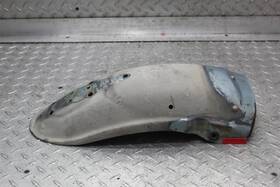
( Manufacturer Part Number: 2206329 ), ( Type: Air Cleaner Case )
Review HONDA Rear Fender fits XL250 1974
The **Honda 2206329 1974 XL250 Rear Fender** is a meticulously crafted, period-correct replacement part designed to restore the classic aesthetic and functionality of your 1974 Honda XL250 dual-sport motorcycle. This fender is a faithful reproduction of the original component, engineered to match the precise dimensions, contours, and mounting points of the factory piece, ensuring a seamless fit without compromising the bike s handling or ride quality. Crafted from high-quality, durable materials, this fender is built to withstand the rigors of off-road adventures while maintaining its sleek, vintage appearance. The design features a sturdy, slightly curved profile that follows the natural lines of the XL250 s frame, providing optimal protection against mud, debris, and minor impacts during trail riding. The mounting hardware is included, allowing for a straightforward installation process that requires minimal tools and expertise, making it an ideal choice for both restorers and enthusiasts looking to preserve the authenticity of their classic Honda. Whether you re preparing your bike for a show, a weekend ride, or a long-distance excursion, this rear fender ensures that your 1974 XL250 retains its timeless charm while delivering reliable performance on and off the pavement.
The **Honda XL250 (1974 model, part number 2206329 for the rear fender)** is a classic dual-sport motorcycle known for its simplicity, reliability, and off-road capabilities. Below is a detailed breakdown of its pros and cons, followed by a conclusion and recommendation.
---
### **Pros**
1. **Proven Reliability and Durability**
The XL250 is a well-engineered machine built on Honda s reputation for durability. Its air-cooled, single-cylinder engine (249cc) is simple, robust, and known for lasting tens of thousands of miles with basic maintenance. Many examples from the 1970s still run today with minimal issues if properly cared for.
2. **Off-Road Capability**
Designed as a dual-sport bike, the XL250 handles rough terrain well thanks to its lightweight frame, long-travel suspension (for its time), and knobby tires. It s a great choice for trail riding, light adventure, or commuting on mixed surfaces.
3. **Low Maintenance and Repairability**
The bike s simplicity means parts are easy to source, especially for common components like the engine, suspension, and electricals. Honda s legacy ensures a wide availability of aftermarket parts, manuals, and restoration guides. Common issues (e.g., carburetor drift, valve adjustments) are straightforward to fix with basic tools.
4. **Fuel Efficiency**
The 250cc engine is thirsty by modern standards but efficient for its class. It typically consumes around **2.5 3.5 liters per 100 km (about 70 90 mpg)**, making it cost-effective for short trips or daily use.
5. **Classic Appeal and Community**
The XL250 is a beloved classic among motorcycle enthusiasts, particularly in the dual-sport and adventure communities. Owning one grants access to a supportive network of riders, clubs, and forums (e.g., Honda XL forums, vintage motorcycle groups) where advice and parts can be easily found.
6. **Lightweight and Maneuverable**
Weighing around **110 120 kg (240 265 lbs)**, the bike is easy to handle, start, and park. Its compact size makes it ideal for urban riding or tight trails.
7. **Historical Significance**
The XL250 was one of Honda s early dual-sport bikes, paving the way for modern adventure motorcycles. Owning one connects you to motorcycle history and the evolution of off-road riding.
8. **Affordability (Compared to Modern Classics)**
While prices vary, a 1974 XL250 in decent condition is often cheaper than newer classics (e.g., 1980s 1990s models). Restoration costs are manageable if you re willing to put in the work.
9. **Versatility**
The bike can be used for commuting, weekend rides, or light touring with minimal modifications. Its simplicity also makes it a good "starter" classic for riders looking to learn about motorcycle maintenance.
10. **Sound and Feel**
The engine has a distinctive, throaty growl that appeals to purists. The bike s ergonomics and balance are well-suited for both on-road and off-road riding, offering a comfortable riding position.
---
### **Cons**
1. **Age-Related Wear and Tear**
A 1974 motorcycle will almost certainly require restoration or maintenance. Common issues include:- **Rust**: Suspension components, frame, and exhaust may need cleaning or replacement.
- **Worn Tires**: Original tires will be long past their useful life; modern alternatives (e.g., Michelin Wild Rider, Maxxis) are needed.
- **Carburetor Drift**: Air-cooled engines often suffer from carburetor issues over time, requiring cleaning or replacement.
- **Brakes**: Drum brakes (if original) are less effective than modern disc brakes; upgrading is recommended for safety.
- **Electrical System**: Wiring, switches, and the generator may need attention; modern ignition systems (e.g., aftermarket CDI) can improve reliability.
2. **Limited Modern Comfort**
The XL250 lacks modern amenities like:- **Disc brakes** (drum brakes are standard).
- **Modern suspension** (long-travel but stiff by today s standards; upgrading forks or shocks can help).
- **Ergonomics**: The seat, handlebars, and footpegs may feel cramped or outdated for taller riders.
- **Wind protection**: No fairings or windshields, leading to wind fatigue on highway speeds.
3. **Performance Limitations**
- **Power**: The 249cc engine produces around **18 20 horsepower**, which is adequate for light riding but underwhelming compared to modern 250cc or larger bikes.
- **Top Speed**: The bike is limited to roughly **100 110 km/h (60 70 mph)**, making it impractical for highway cruising without modifications (e.g., exhaust, carb tuning).
- **Torque**: While the engine has decent low-end torque, it s not as smooth as modern single-cylinder engines (e.g., Honda CB300R).
4. **Fuel and Emissions**
- The bike runs on **regular gasoline** but may require adjustments if fuel quality varies.
- It does not meet modern emissions standards, so it cannot be legally ridden in areas with strict regulations (though many regions allow vintage bikes with proper registration).
5. **Parts Availability**
While Honda parts are widely available, some components (e.g., specific suspension parts, original fenders) may be hard to find without aftermarket alternatives. Prices for rare parts can be high.
6. **Riding Position**
The upright, relaxed riding position is comfortable for casual riding but may not suit aggressive or sporty riders. The high handlebars can also make the bike feel less nimble on tight trails.
7. **Resale Value**
Classics like the XL250 hold value better than some other vintage bikes, but it s not a high-end collector s item. Resale depends heavily on condition and restoration effort.
8. **Weather Exposure**
Without fairings or a windshield, riding in rain or wind can be uncomfortable. The bike offers little protection from the elements.
9. **Modification Costs**
While upgrades (e.g., disc brakes, modern suspension, exhaust) can improve the bike, they add to the cost. A full restoration or significant upgrade project can be expensive.
10. **Learning Curve for Maintenance**
Air-cooled engines and mechanical fuel systems require more attention than modern fuel-injected bikes. Riders must be comfortable with basic (or advanced) maintenance tasks.
---
### **Conclusion**
The **1974 Honda XL250** is an excellent choice if you re looking for a **reliable, low-maintenance, off-road-capable motorcycle** that offers a piece of history. It s ideal for riders who:
- Enjoy the simplicity and charm of a classic bike.
- Are willing to invest time in maintenance or restoration.
- Prioritize durability and repairability over modern performance.
- Want a versatile machine for trails, commuting, or weekend rides.
- Appreciate the community and nostalgia of vintage motorcycles.
However, it s **not the best choice** if you:- Want a bike for highway cruising or high-speed riding.
- Prefer modern comforts like disc brakes, fairings, or ergonomic seating.
- Are unwilling to put in effort for restoration or maintenance.
- Need a bike that meets strict emissions or insurance requirements without modifications.
- Seek a high-performance or high-value investment.
---
### **Recommendation**
**Buy the 1974 Honda XL250 if:**- You find a **well-documented bike** with a **clean title** and **minimal rust** (or one you re willing to restore).
- You re prepared to **budget for maintenance** (expect to spend **$1,000 $3,000 ** on a full restoration, depending on condition).
- You plan to **ride it regularly** and enjoy the process of keeping it running.
- You re drawn to its **off-road heritage** and the thrill of a classic dual-sport.
**Avoid it if:**- You want a **plug-and-play** bike with modern features.
- You re not comfortable with **basic mechanical work** (e.g., carburetor tuning, valve adjustments).
- The bike has **severe rust, frame cracks, or unknown maintenance history**.
- You re primarily looking for a **high-speed or highway-capable** motorcycle.
**Final Verdict:**The XL250 is a **fantastic project bike** for enthusiasts who value **simplicity, reliability, and off-road capability**. With proper care, it can be a joy to ride for decades. However, it s not a "set-and-forget" purchase expect to put in work to keep it running smoothly. If you re willing to embrace the challenge, it s a rewarding and fun motorcycle to own.
Details:
ADDRESS: Steele's Cycle, 2025 W. ;; 1974 HONDA XL250 REAR FENDER. If the item does not fit motorcycle model specified in listing. Many countries only allow 79 max package length and girth combined.
Each part is systematically placed to be easily located once purchased. More options available upon request. Inglewood, CO 80110.
part #: 2206329 price
- $79.99
specifications fendeframat:
- for models: Xl250
- for makes: Honda
- for years: 1974
- mpn: 2206329
- type: Air Cleaner Case
offer fendeframat:
- best offers: True
- quantity: 1
- availability: In Stock
- sold: 0
- started: April 10, 2026
- options: Ship-to-home
seller fendeframat:
- # reviews: 57898
- city: Englewood, Colorado
- rating: 100.0%
general fendeframat:
- condition: Used
- Motorcycle Scooter Parts Accessories > Body Frame > Other Body Frame
shipping fendeframat:
- service: FedEx Ground / FedEx Home Delivery
- type: Fixed
- cost: $19.99
- carrier: FedEx
- transit: 4-7 Days
- class: Standard
payments fendeframat:
- wallet: Google-pay
- credit card: Visa
- other
returns fendeframat:
- policy: Returns Accepted
- paid by: Buyer
- time: 30 Days
Honda 2206329 Is Similar To:
- 1300s Rear 2006 Vtx Complete Honda Fender (36.4% similar) Fender set, RR. This offer is for a used genuine oem honda rear fender off of a 2007 VTX1300S that was converted into a trike. R303M Cabernet red part Mae A20ZC retail the rest of the fender is in great condition. There is a small chip on the tip of the fender and some marks under where the chrome...(August 28th, 2015)
- Cb550 61100-323-030xw Honda Oem New Front Fender Cb 550 500 450 750 K Four Mud Gaurd Flap 75 76 (22.9% similar) 03 discontinued item model's with no year CB450K5 a front fender model's with no year CB450K6 a front fender model's with no year CB450K7 a front fender model's with no year CB500 a steering stem front fender model's with no year CB500K1 a steering stem front fender model's with no year CB500K2 a ...(January 20th, 2016)
- 61110-mbh-760za Shadow Frtype5 Aero Honda Fender (28.6% similar) There are few light scratches but not very noticeable. TYPE5 MB 760ZA shadow aery this is a customer return, there are 2 dents on the item. His oem part can be found within the schematics of the following honda machines 1999 SHADOW aery 1100 VT1100C3. One of the top and one on the side, see photos...(September 5th, 2015)
- 80100-110-671df Honda Sl 100 Rear Fender New Candy Emerald Green (42% similar) Paint and fender are perfect. No chips, dings etc. Fits honda SL 100 disport model's. May fit other model's. Brand new, genuine honda SL100 rear fender. Color is candy emerald green...(November 2nd, 2015)
- 80110-mch-f10zb Fender Vtx1800f Honda Oem Brand Rear (22.7% similar) Brand new oem honda rear fender for a 2005 honda VTX1800F may fit other years brand new in the box save big...(August 22nd, 2015)
- 80110-mea-6707e 77350-mcv-00 Honda 2003-2005 Rear Fender Vtx 1300 S And R (40.4% similar) Honda part Mae 670ZE drongo red met. Helmet lock has no key. Comes with inner grab rail and rear fender pipe. Also fits 06 TX 1300 rear fender TX 1300 model's...(October 26th, 2015)
- 80110-mm8-880zb Vt1100c Rear Shadow Honda Fender (35.7% similar) This is new in the box. This offer is for a genuine honda rear fender for the following list of bikes. 1992 VT1100C ac rear fender 1993 VT1100C ac rear fender...(August 25th, 2015)
- Vtx1800n Honda 2007 07 Vtx1800 Oen Rear Fender Mud Guard Wheel Hugger (40% similar) Note used parts are sold as is, and are described to the best of our ability. This item is in great used working condition. If you are unsure of an item, ask questions before buying. Most items sold are used, unless stated, and will have wear...(October 31st, 2015)
- 300fw 1988 Maier Blue Rear Fender Trx Honda 4x4 Dark (40.9% similar) I will reply within 24 hours. Remember that I am always at your service. Buyer pays return shipping. Mailer manufacturing is the largest manufacturer of vacuum formed plastic products in the nation. Keep all packaging materials and the original shipping box. Do not hesitate to contact me. I will try...(September 6th, 2015)
- Fender Vt1100 Aero 1997 Shadow 1995 1996 Rear Honda Oem Painted (12.1% similar) Has some factory imperfections and other minor light scratches from sitting around. Parts that have any electrical pieces or components are not returnable. I do not know the exact fitment...(August 1st, 2015)
- Black Oem Fender Honda Aero 98-00 Vt1100c3 Painted Rear Shadow (18.4% similar) If you are outside the 48 contiguous states or need faster delivery service, please before purchasing the item. Parts that have any electrical pieces or components are not returnable...(July 29th, 2015)